When a marriage comes to an end, many Ohio couples discover they have options beyond traditional divorce. Dissolution of marriage offers a more collaborative, less contentious path for spouses who can work together to end their marriage amicably. Unlike divorce, in which one party files against the other, dissolution permits couples to jointly petition the court and maintain control over the terms of their separation.
In this guide, our Columbus dissolution attorneys will walk you through the complete dissolution process in Ohio, from determining eligibility to finalizing your case in court.
What Is a Dissolution of Marriage in Ohio?

Dissolution of marriage is a legal process in which both spouses mutually agree to end their marriage and work together to resolve all issues before approaching the court. In Ohio, dissolution requires complete agreement between spouses on every aspect of their separation, including property division, debt allocation, spousal support, child custody, and child support.
The main distinction between dissolution and divorce centers on cooperation. While divorce cases often involve conflict and litigation, dissolution requires spouses to act as a team throughout the process. This collaborative nature typically results in faster resolutions, lower costs, and reduced emotional stress for all parties involved.
Eligibility Requirements for Dissolution in Ohio
Before filing for dissolution of marriage, you must meet specific criteria established by Ohio law under Ohio Revised Code Section 3105.63. These requirements ensure that Ohio courts have proper jurisdiction and that both parties genuinely consent to the dissolution of their marriage.
Residency Requirements
At least one spouse must have been a resident of Ohio for at least six months immediately preceding the filing of the dissolution petition. You'll file in the Court of Common Pleas in the county where either spouse resides.
Mutual Agreement
Both spouses must voluntarily consent to the dissolution of the marriage. Dissolution cannot proceed if one spouse objects or refuses to cooperate. This mutual consent forms the foundation of the entire dissolution process and distinguishes it from contested divorce proceedings.
Complete Settlement of All Issues
You must resolve all marital issues before filing, including division of marital property and assets, allocation of marital debts, spousal support (alimony) terms if applicable, parenting time schedules and custody arrangements, child support calculations, and health insurance coverage for children.
Written Separation Agreement
Ohio law requires a detailed, written separation agreement signed by both parties. This document must address every aspect of your separation and demonstrate that both spouses understand and accept the terms. The court will review this agreement to ensure fairness and proper consideration of any children's welfare.
Preparing Your Separation Agreement

The separation agreement serves as the cornerstone of your dissolution case. This legally binding document outlines how you'll handle all aspects of your separation and becomes part of your final court order.
Property and Debt Division
Your separation agreement must address property division by listing all marital assets, including real estate, vehicles, bank accounts, retirement accounts, and investments. The agreement should specify exactly who receives each item.
You must also account for all marital debts, including mortgages, car loans, and credit card balances. The agreement should clearly state which spouse assumes responsibility for each debt and establish provisions to protect both parties from future claims.
Provisions for Minor Children
If you have minor children, your agreement requires additional provisions. Ohio courts prioritize children's welfare, so you'll need to create a detailed parenting plan covering physical custody arrangements and residential schedules, legal custody decisions regarding education and healthcare, holiday and vacation schedules, and transportation arrangements.
Support Obligations
Child support calculations must follow Ohio's child support guidelines, which consider both parents' incomes, health insurance costs, and parenting time percentages. Your agreement should specify the payment amounts, due dates, and methods of payment.
For spousal support, if applicable, outline the amount, duration, and payment schedule. Consider whether support will be modifiable or non-modifiable.
#cta_start
Get Help with Your Separation Agreement
The separation agreement is the foundation of your dissolution case. Our attorneys draft thorough, legally sound agreements that address property division, child custody, support obligations, and all other marital issues, giving you confidence as you end your marriage.
#cta_end
Required Documents and Forms
Filing for dissolution in Ohio requires several specific forms. While exact forms may vary slightly by county, the standard documents include a petition for dissolution of marriage (joint petition filed by both spouses), your comprehensive separation agreement (must be notarized), and various affidavit forms.
Ohio courts require financial disclosure affidavits from both spouses, an affidavit regarding children if applicable, and a health insurance affidavit for those with children.
Depending on your circumstances, you may need parenting plans, child support worksheets, Qualified Domestic Relations Orders (QDROs) for the division of retirement accounts, and property transfer documents.
How to File for Dissolution in Ohio
Once you've prepared all documents and reached a complete agreement, you're ready to begin the filing process. Here's how dissolution works from start to finish.
File Your Petition

Visit the Clerk of Courts' office in the Court of Common Pleas for your county. Submit your petition for dissolution along with your separation agreement and all required documents. Both spouses should attend the filing, though this isn't always mandatory.
You'll pay a filing fee, which typically ranges from $175 to $350, depending on your county. Some courts offer fee waivers for qualifying low-income individuals. The court will assign a case number to your petition and stamp your documents with the filing date.
Wait for the Mandatory Period
Ohio law imposes a mandatory waiting period between filing and the final hearing. You must wait at least 30 days but no more than 90 days after filing before the court can finalize your dissolution.
This cooling-off period ensures both spouses have time to reconsider their decision. During this waiting period, you and your spouse must continue living according to the terms of your separation agreement. If you fail to meet the 90-day deadline for scheduling a hearing, your case will be dismissed.
Schedule Your Final Hearing
Contact the court to schedule your final hearing date, ensuring it falls within the 30- to 90-day window. Some counties allow online scheduling, while others require phone calls or in-person visits. Schedule as early as possible, as court calendars fill quickly.
Attend the Court Hearing
Both spouses must appear at the final hearing. The hearing typically lasts 15 to 30 minutes and follows a straightforward format. The judge will verify both spouses' identities, confirm the spouses' voluntary agreement to the dissolution, review the separation agreement, ask questions regarding property division and, if applicable, children, and ensure that both parties understand the agreement's terms.
The judge will ask specific questions to ensure that the separation agreement is fair and complies with legal requirements. For cases involving children, expect more detailed questions about parenting arrangements and child support.
Receive Your Final Decree
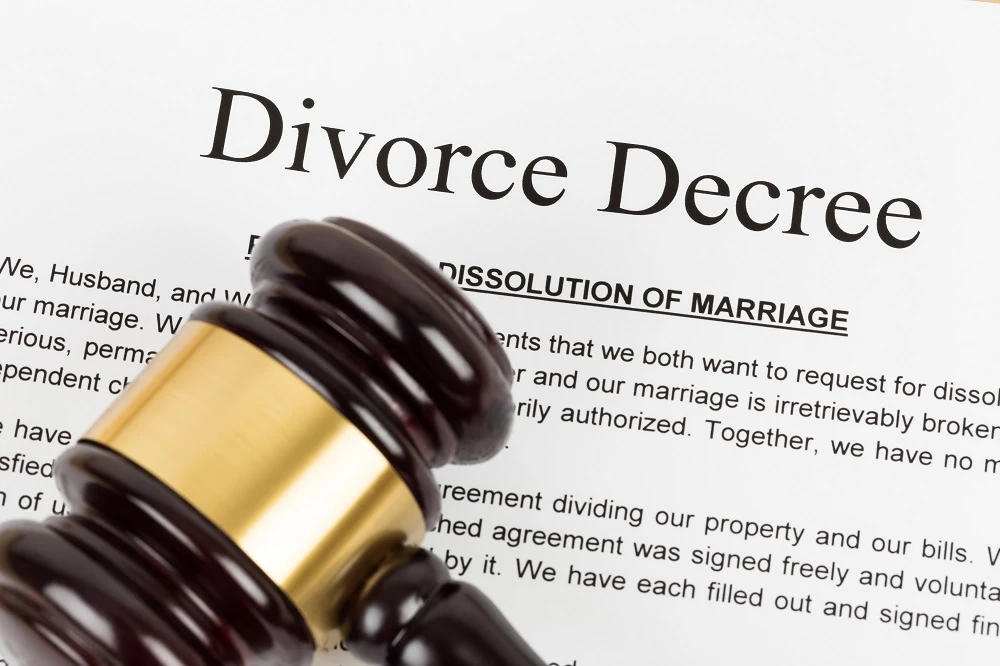
If the judge approves your dissolution, they'll sign the final decree of dissolution that day or shortly after. This decree legally ends your marriage and incorporates your separation agreement. The court will provide certified copies, which you'll need for various purposes like name changes and property transfers. The decree becomes effective immediately upon signing.
Timeline and Costs
From filing to finalization, most dissolutions take 30 to 90 days. The mandatory waiting period accounts for most of this timeframe.
Filing fees range from $175 to $350, depending on your county. If you retain the services of an attorney, expect to pay for document preparation and hearing attendance, typically $2,000 to $5,000 in total for both spouses.
Additional expenses may include property appraisals ($300 to $500), business valuations ($2,000 to $10,000), and QDRO preparation ($500 to $1,500 per retirement account). These costs remain significantly lower than contested divorces, which often exceed $15,000 to $30,000 per spouse. Budgeting for the costs helps you prepare financially.
Dissolution vs. Divorce: Which Is Right for You?
Choosing between dissolution and divorce depends on your specific circumstances and your ability to work cooperatively with your spouse. Each option has distinct characteristics that make it more suitable for different situations.
Dissolution offers several advantages when both spouses genuinely agree on all terms, can communicate effectively, and neither spouse suspects hidden assets. Divorce becomes necessary when spouses cannot agree on key issues, one spouse refuses to cooperate, you suspect hidden assets or financial misconduct, or domestic violence has occurred.
Having an experienced attorney help you doesn't mean your dissolution will be contentious and difficult. As is often the case, good attorneys help couples work through issues collaboratively.
After the Decree: Next Steps
Receiving your final decree marks a new beginning, but several tasks require attention. Change your name if desired, transfer property titles as outlined in your agreement, implement your parenting plan if you have children, and update beneficiary designations on life insurance and retirement accounts.
Get Professional Guidance at Dailey Law Offices
Filing for dissolution of marriage in Ohio provides couples with an efficient, cost-effective way to end their marriage when agreement exists on all major terms. By following the proper procedures and preparing thorough documentation, you can finalize your dissolution within a few months.
At Dailey Law Offices, we guide Ohio families through dissolution with clarity and efficiency, helping you prepare accurate agreements and handle the filing process smoothly. Contact us today to schedule a consultation and learn how we can help you file for dissolution of marriage in Ohio.

How much does it cost to get a stone restored?
How much you end up spending to restore stone varies on the type of stone, the technique, and the stone’s current condition. Stone in good condition will cost less to restore, whereas stone that has a lot of wear and tear may require a longer restoration.

Heading
Don’t face life’s challenges alone. Schedule your free consultation with Dailey Law Offices today and let us provide the professional guidance you need for divorce, custody, estate planning, or probate.















.webp)