Many people search for a checklist that tells them when divorce is the right decision. The reality is more complex. What feels impossible for one person may feel manageable for another.
Some people remain hopeful that counseling or lifestyle changes can repair the relationship. Others may feel that staying married no longer aligns with their sense of self or future happiness. It is normal to have mixed feelings, where hope and doubt often exist side by side during major life transitions.
Divorce is rarely the only option. Before deciding whether to get a divorce, it can help to explore alternatives and understand how each path may affect your family. To help you start thinking through your situation, we put together a short quiz below. After that, our experienced Columbus divorce attorneys will walk you through the key factors that shape this life-altering decision.
Red Flags That Point Toward Divorce
Some marriage problems are painful but workable. Others keep repeating until the relationship becomes unsafe, unstable, or disrespectful. "When should I get a divorce?" becomes a daily thought. These are the patterns we see most often:
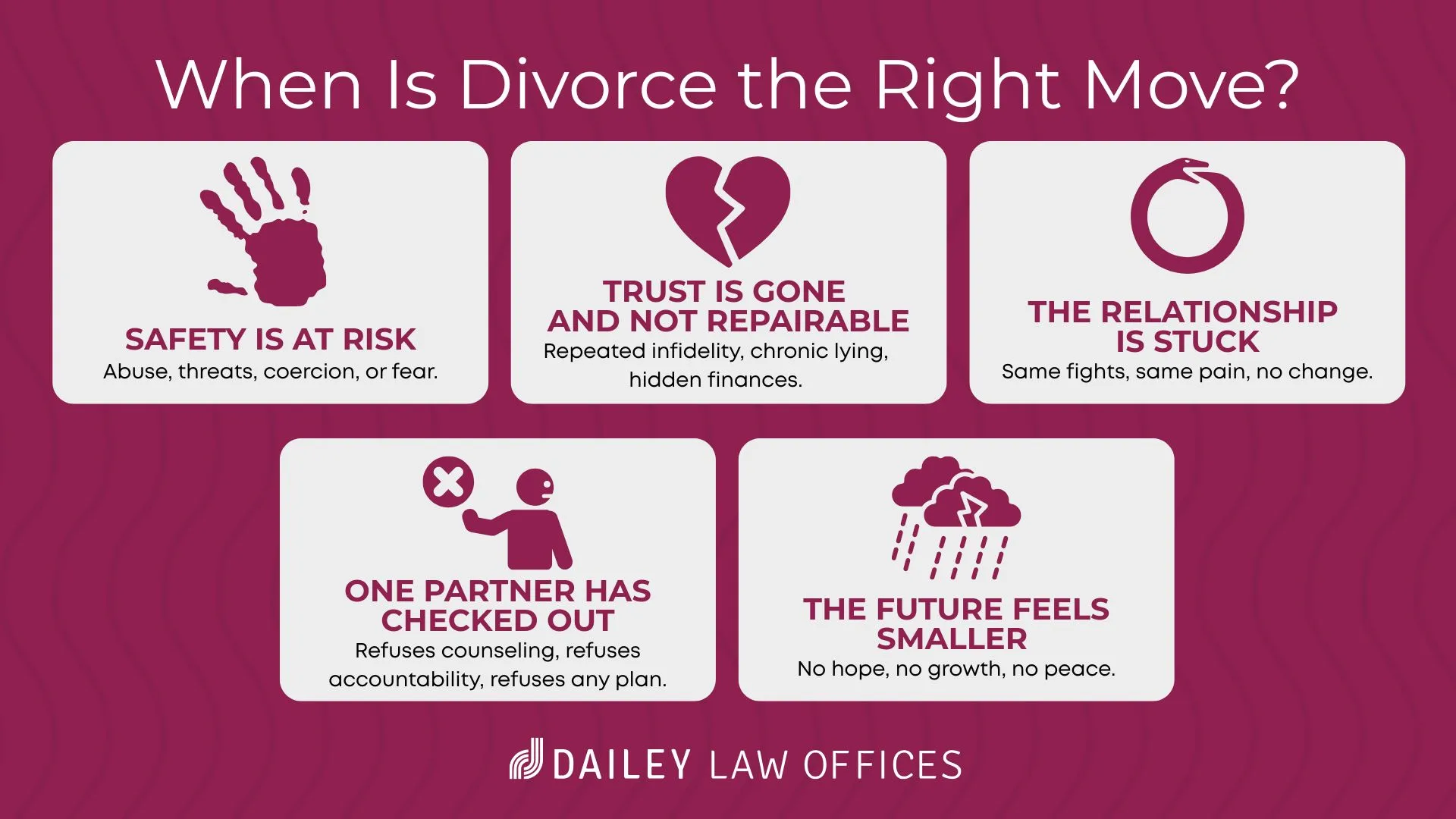
- Domestic violence or physical abuse. Safety comes first, always. If there’s violence, threats, intimidation, or fear, divorce may be the right step to protect life and future.
- Emotional or verbal abuse. Constant belittling, control, humiliation, or isolation wears down self-confidence and can make normal life feel impossible.
- Infidelity that doesn’t stop. One incident is hard enough. Repeated cheating, secret relationships, and ongoing lying can turn a marriage into a permanent trust wound.
- A blame game that never ends. If every conversation becomes “you vs. me,” repair stops.
- Broken promises with no follow-through. Apologies that don’t come with change are just resets for the next round.
- Total refusal to handle conflict. If one partner stonewalls, disappears, or refuses any professional help, the marriage can’t move forward.
If any of these are present, the “right answer” is not to wait for a perfect moment. It’s to protect stability, dignity, and safety.
Questions That Usually Settle the Divorce Decision

Ohio Revised Code Section 3105.01 outlines the legal grounds for divorce, including incompatibility, adultery, extreme cruelty, and gross neglect of duty.
When deciding whether to get a divorce, emotion can cloud judgment. The goal is not to dramatize the situation, but to look at it honestly. These are the questions that tend to bring clarity:
- Is there safety and respect in the marriage? A relationship should not involve fear, physical abuse, emotional abuse, or ongoing humiliation.
- Have we made real efforts to repair the relationship? This includes counseling, serious conversations, and concrete changes — not just promises after conflict.
- Has trust been permanently damaged? Repeated cheating, hidden finances, or chronic dishonesty can make rebuilding impossible.
- Are the problems temporary or long-term? Stress from work, illness, or a short, difficult period is different from years of unresolved marriage problems.
- Are we staying married out of fear? Fear of finances, judgment, change, or being alone can keep someone stuck even when they feel deeply unhappy.
- Can we realistically imagine a healthy relationship again? Not an idealized version of the past, but a stable future built on mutual effort.
- If nothing changes for the next few years, would we accept that reality? If the honest answer is no, that matters.
#cta_start
Speak with a Columbus Divorce Lawyer
We help you evaluate your situation, understand your legal options, and build a strategy that protects your children, finances, and future, whether you pursue divorce or another path.
#cta_end
Kids and Divorce
For parents, the decision to divorce usually comes down to one fear: “What will this do to the children?”
Divorce does change the family structure, but kids don’t need perfect parents. They need stable parents who show up, keep routines, and stop the chaos.
When courts address child custody, the focus is on the child’s best interests, not which parent “wins”. Clear parenting plans, respectful communication, and reliable routines often make the biggest difference in helping children adjust to life in two households.
Here’s what tends to matter most:
- Consistent parenting. Predictable schedules and rules reduce anxiety.
- No adult conflict in front of kids. Kids should not be messengers or referees.
- A workable plan for two households. Same school routines, same expectations, fewer surprises.
- Clear financial structure. Child support exists to protect children’s stability, not to punish an ex-husband or ex-wife.
- Respect for parental roles. Courts care about parenting behavior, not revenge narratives.
If the marriage environment has become hostile, tense, or emotionally unsafe, divorce can reduce the daily stress kids live with.
Financial Consequences of Divorce

For many people, the financial side of divorce is just as significant as the emotional transition, which is why understanding these impacts early in the divorce process matters.
One of the most immediate changes involves shifting from one shared household to two separate households. Housing costs, utilities, insurance, groceries, and transportation expenses often increase because each person must manage independent living arrangements. Budgeting becomes essential, especially during active divorce proceedings when temporary financial orders may be in place.
Key financial issues include:
- Division of assets and debts. Courts evaluate marital property, retirement accounts, real estate, and outstanding debts to determine a fair distribution under Ohio law.
- Child support and parenting expenses. Child support may be ordered to help cover children's housing, healthcare, education, and daily needs.
- Spousal support considerations. Depending on income differences and the length of the marriage, ongoing financial support may be included in the final court order.
- Credit and financial responsibility. Joint credit cards, loans, and shared accounts can affect both spouses’ credit histories until they are formally addressed in the divorce process.
- Lifestyle adjustments. Changes in income and expenses often require reevaluating spending habits, savings goals, and future financial plans.
Financial stress does not automatically mean divorce is the wrong decision, but it highlights the importance of realistic expectations. Careful planning, accurate financial disclosure, and clear legal guidance can help reduce uncertainty and create a more stable transition into post-divorce life.
Counseling and Professional Support

Counseling can help clarify the decision to divorce, but it is not meant to push someone toward or away from divorce. A counseling session with a licensed clinical psychologist or therapist offers a neutral space to address marriage problems, communication issues, or emotional stress without turning discussions into a blame game.
Professional support may include:
- Individual therapy. Focused on emotional health, self-confidence, and personal growth during a difficult time.
- Couples counseling. Helps partners discuss conflict, infidelity, finances, or long-standing relationship concerns.
- Support during divorce proceedings. Therapy can help manage stress and adjust to major life changes.
Counseling is not required before starting the divorce process, and it may not be appropriate in situations involving domestic violence or physical abuse, where safety should come first.
Should You Get a Legal Separation Instead
Divorce is not the only legal path available when a marriage reaches a breaking point. In Ohio, legal separation allows spouses to live separately while remaining legally married. It provides structure and enforceable court orders without formally ending the marriage.
Legal separation can address many of the same issues handled in divorce proceedings, including:
- Child custody and parenting schedules
- Child support and spousal support
- Division of property and debts
- Temporary financial responsibilities
The key difference between legal separation and divorce is that the marriage does not legally end. Neither spouse can remarry, and the legal relationship remains intact. For some families, this option makes sense when religious beliefs discourage divorce, when health insurance coverage depends on marital status, or when both spouses need time to re-evaluate the future.
Legal separation can also create immediate financial and parenting boundaries if living together has become difficult, but a final divorce decision has not yet been made. It is not a casual step, however. Court involvement, formal filings, and legally binding orders are still part of the process.

What to Do Before Filing for Divorce
If you're leaning towards filing for a divorce, there are a few smart moves that protect you during the divorce process:
- Gather financial records. Income, bank statements, debts, retirement, and major assets.
- Write down the parenting routine. Pickups, school, activities, who does what.
- Avoid big money moves. No large purchases, no hiding assets, no dramatic changes.
- Prioritize safety planning if there is abuse. Protection orders and local resources may apply.
- Talk to a family law attorney early. Not to inflame conflict, but just so you don’t walk into court unprepared.
These basic steps don’t make a divorce inevitable. They prevent avoidable damage if divorce proceedings begin.
Moving Forward with the Right Support
Deciding whether to get a divorce is rarely simple. It involves weighing emotional well-being, family dynamics, financial realities, and long-term goals. Some marriages reach a point where separation or divorce becomes the healthiest step forward, while others benefit from time, counseling, or legal structure before a final decision is made. If you haven't already, the quiz at the top of this page can help bring some clarity to where you stand. What matters most is having clear information and guidance that helps turn uncertainty into a confident next step.
Dailey Law Offices serves individuals and families throughout Columbus, Ohio, with thoughtful, practical support during difficult transitions. Whether someone is considering divorce, exploring legal separation, or preparing for divorce proceedings, our divorce attorneys can provide legal guidance and help protect your parental rights, financial stability, and your family’s future. Contact us for a free consultation.

How much does it cost to get a stone restored?
How much you end up spending to restore stone varies on the type of stone, the technique, and the stone’s current condition. Stone in good condition will cost less to restore, whereas stone that has a lot of wear and tear may require a longer restoration.

Heading
Don’t face life’s challenges alone. Schedule your free consultation with Dailey Law Offices today and let us provide the professional guidance you need for divorce, custody, estate planning, or probate.















.webp)