When a marriage reaches the point where it cannot continue, Ohio law provides more than one legal path forward. The two most common options are divorce and dissolution. At first glance, they may look similar because both legally end a marriage in Ohio. However, the process, court involvement, and level of agreement required between spouses differ significantly.
This article aims to help you choose between divorce and dissolution in Ohio. While both options lead to the same outcome (the legal termination of the marital relationship), the steps involved and the court's role can vary greatly.
Divorce and Dissolution: Same Outcome, Different Process
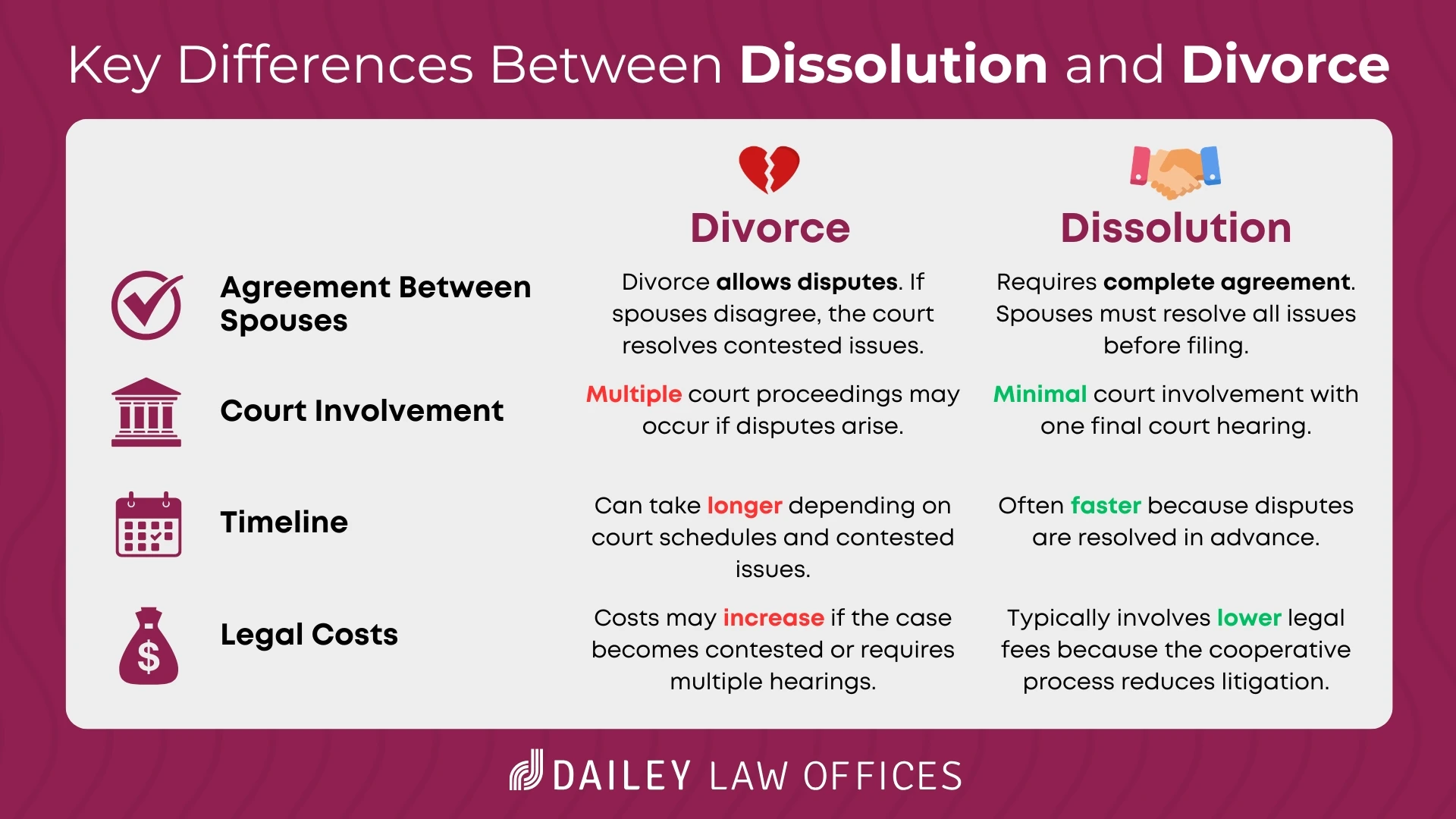
Both divorce and dissolution legally end a marriage. The court ultimately issues a final order that divides marital property, resolves parenting matters, and when necessary, determines support obligations.
The key difference lies in how the process unfolds.
In a divorce proceeding, one spouse files a complaint seeking to end the marriage. The other spouse then has the opportunity to respond. If the parties disagree on major issues such as property division, spousal support, or child custody, the court must resolve those disputes.
By contrast, dissolution of marriage is designed as a cooperative process. Instead of one spouse filing against the other, both spouses file a joint petition together. Before filing, they must reach a complete agreement on every major issue in the case.
This distinction dramatically changes how the legal process moves forward.
What Is a Divorce in Ohio?
Divorce is the traditional court process used when spouses cannot agree on how to end their marriage. In this situation, one spouse files divorce papers, and the court becomes responsible for resolving disputed issues.
The divorce process typically involves multiple stages, including:
- Filing a complaint for divorce;
- Serving the other spouse with divorce papers;
- Requests for temporary orders addressing finances, child custody, or support;
- Discovery, in which financial information such as bank accounts and property records is exchanged;
- Settlement negotiations or mediation;
- A final court hearing or trial if disputes remain unresolved.
Because the court must evaluate evidence and make final decisions, divorce can become a complex legal process, especially when spouses disagree about major issues.
Some divorces become contested, meaning the spouses cannot resolve disputes over matters such as property division, spousal support, child custody, and child support.
Ohio law also requires the person filing for divorce to state legal grounds. These grounds can include incompatibility, gross neglect of duty, willful absence, or other legally recognized reasons. While many divorces proceed under no-fault grounds, the legal structure still requires a formal court process.
Because of court schedules, legal filings, and the emotional toll of disputes, the divorce process can take several months or longer, depending on the complexity of the case.
What Is Dissolution in Ohio?
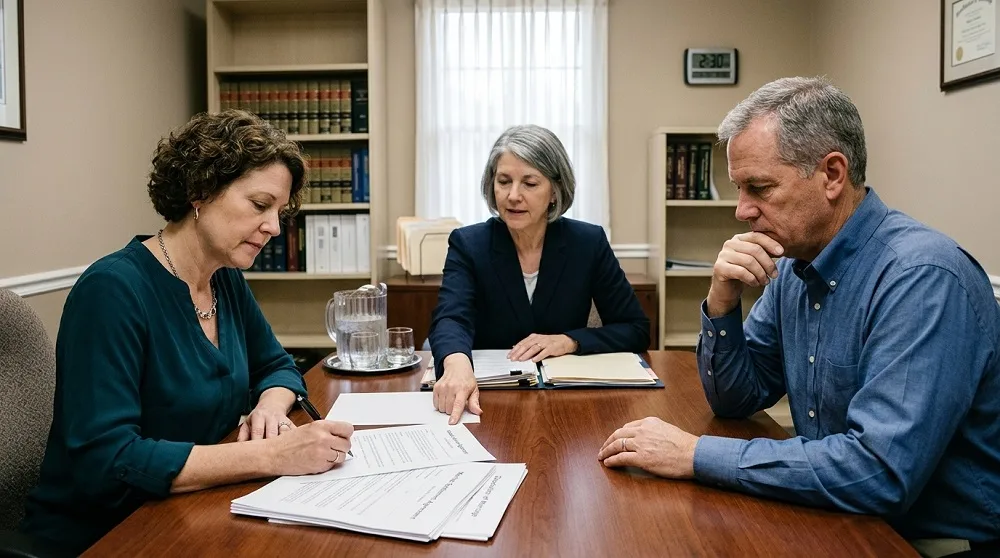
Dissolution in Ohio takes a different approach. Instead of starting with conflict, the process begins with cooperation.
For a dissolution of marriage, both spouses must reach a full agreement on every issue before filing anything with the court. This agreement is included in a separation agreement, which outlines how the couple will divide assets, handle parenting matters, and address financial responsibilities.
A separation agreement typically addresses:
- Property division, including marital property, real estate, bank accounts, and debts;
- Spousal support, if either spouse will provide financial assistance;
- Child custody and parenting arrangements when minor children are involved;
- Child support obligations.
Once the agreement is complete, the spouses file a joint petition for dissolution with the court.
Unlike a divorce proceeding, dissolution usually involves minimal court involvement. There are no disputes for the court to resolve because the parties have already settled every issue. The court schedules a final hearing, where a judge reviews the separation agreement to confirm that both spouses entered into it voluntarily.
If everything is in order, the judge approves the agreement and issues a final order ending the marriage.
#cta_start
Get Clear Guidance on Divorce or Dissolution
Whether you are considering dissolution or facing a contested divorce, Dailey Law Offices provides experienced legal guidance to protect your rights, finances, and family.
#cta_end
When Divorce May Be the Better Option
Dissolution works best when both spouses are willing to cooperate. However, not every situation allows for that level of agreement.
Divorce may be necessary when:
- One spouse refuses to participate in a dissolution petition.
- The spouses disagree about property division or finances.
- There are concerns about hidden assets or financial misconduct.
- The parties cannot reach an agreement regarding child custody or parenting arrangements.
- Situations involving domestic violence require court oversight and protective orders.
In these situations, the divorce process allows the court to step in and make fair decisions when cooperation breaks down.
When Dissolution May Be the Better Option
When spouses can communicate and resolve issues respectfully, dissolution can offer a more efficient path forward.
Dissolution may work well when:
- Both spouses want to end the marriage without conflict.
- The couple has already agreed on financial matters and parenting decisions.
- Both parties want to minimize costs and court involvement.
- The spouses want to avoid prolonged court proceedings and emotional stress.
Because the process is collaborative, dissolution often allows couples to move forward more quickly and with less tension.
Moving Forward with Dailey Law Offices
Ending a marriage is rarely easy, but the legal path forward should not introduce unnecessary confusion. Whether a case involves a cooperative dissolution or a contested divorce, experienced legal guidance can help protect financial interests, parenting rights, and long-term stability.
Columbus family law attorneys at Dailey Law Offices serve individuals and families throughout Central Ohio, with clear, practical representation in divorce and dissolution cases. From drafting separation agreements to handling contested divorce proceedings, the firm helps clients navigate each stage of the court process with confidence. Contact us for a free consultation.
Faqs
#faqs_start
Is dissolution better than divorce?
Dissolution is not automatically better than divorce. Both legally end a marriage in Ohio, but dissolution requires a complete agreement between spouses before filing. If the parties cannot agree on issues such as property division, child custody, or support, a divorce may be the only viable option.
Is a dissolution of marriage easier than a divorce?
A dissolution is often simpler because both spouses agree on all major issues before filing with the court. The couple submits a joint petition and attends a final hearing where the judge reviews their separation agreement. Because there are no contested issues, the process usually involves less court involvement than a divorce proceeding.
How do you know when it's time to separate?
Many people begin considering separation when ongoing marriage problems, loss of trust, or constant conflict make the relationship feel unsustainable. Situations involving abuse, infidelity, or emotional disconnection often lead individuals to reevaluate the future of the marriage. The decision is personal and depends on whether the relationship can realistically improve.
Can a judge deny a dissolution?
Yes, a judge can deny a dissolution if legal requirements are not met. Both spouses must appear at the final hearing and confirm they voluntarily agreed to the separation agreement. If either spouse withdraws consent or the agreement is incomplete, the court may dismiss the case.
What is a silent divorce?
A silent divorce describes a relationship where spouses remain legally married but emotionally disconnected. Communication becomes minimal, and the partners function more like roommates than a couple. Although it is not a legal term, it often describes marriages where the relationship has effectively ended without formal divorce proceedings.
#faqs_end

How much does it cost to get a stone restored?
How much you end up spending to restore stone varies on the type of stone, the technique, and the stone’s current condition. Stone in good condition will cost less to restore, whereas stone that has a lot of wear and tear may require a longer restoration.

Heading
Don’t face life’s challenges alone. Schedule your free consultation with Dailey Law Offices today and let us provide the professional guidance you need for divorce, custody, estate planning, or probate.















.webp)